An open source engine that plays the original Total Annihilation natively on macOS, Windows and Linux, from your own copy of the game.
29 years to the day after the original game's release.
Fact sheet
Project
Open Annihilation
Tagline
Open Source, cross-platform re-implementation of Total Annihilation game engine.
Developer
Steve Gray, with community contributors
Release
Version 0.2, 27 September 2026, 29 years to the day after Total Annihilation's North American launch on 27 September 1997
Platforms
macOS, Windows and Linux (native builds for each)
Codebase
Nearly 400,000 lines of code, C++20 on SDL3
Price
Free and open source. Requires a copy of Total Annihilation, sold on Steam and GOG, currently $1.49 on GOG. The original free demo, preserved on the Internet Archive, also works.
Licence
GNU General Public License version 3. The engine is free software and will stay that way. The networking code for online play is held back for now to protect the integrity of the still-active multiplayer scene, and will join the GPL release once that risk has been mitigated.
Open Annihilation is a free, open source engine that plays the original 1997 real-time strategy classic Total Annihilation on modern macOS, Windows and Linux machines. It reads the game's own data files and save games from a copy bought on Steam or GOG, or from the original free demo, and aims to match the final official release, version 3.1c, in behaviour rather than reimagine it.
Long
Total Annihilation, designed by Chris Taylor and released by Cavedog Entertainment on 27 September 1997, is one of the most influential real-time strategy games ever made: three-dimensional units and terrain, physics-simulated projectiles, a streaming economy and a scale of warfare that later games spent years catching up with. The game is still sold today, but it was written for Windows 95 and 1997 hardware, and playing it on a current machine, especially a Mac or a Linux desktop, means compatibility layers, resolution hacks and luck. Open Annihilation's first release, on 27 September 2026, arrives 29 years to the day later.
Open Annihilation replaces the original executable with a new, portable engine written from scratch. It ships no game content. Instead it loads the archives, maps, unit models, unit scripts, sounds and music from an installed copy of the retail game, including both expansion packs, The Core Contingency and Battle Tactics. The single-player campaigns, skirmish matches against the computer players, unit scripting, path finding, weapons, the interface and the original save-game format all run in the new engine. Matches render at native resolution, from 640x480 to 8K, while keeping the game's original 8-bit look.
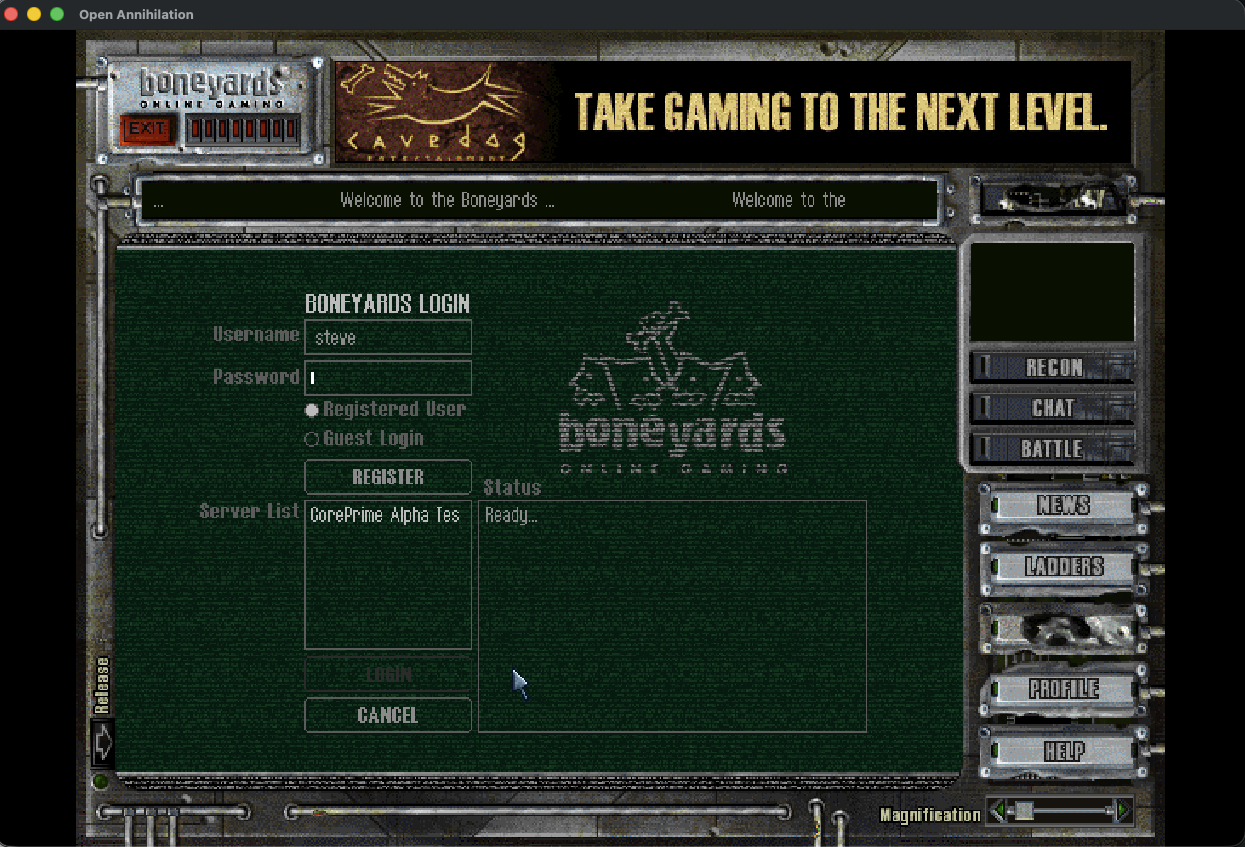
Online multiplayer via a rebuilt Boneyards service, called Core Prime, is anticipated for Halloween 2026 and is already in private beta with community members. The intention is that the game will be network-compatible with the unmodified game when released.
What it does today
Plays the real game. Loads the retail game's archives, maps, units, scripts, sound, speech, CD music and intro movies. No content is bundled or redistributed.
Both expansions. Works with the full retail game including The Core Contingency and Battle Tactics.
Campaigns and skirmish. The Arm and Core campaigns with briefings and victory conditions, and skirmish matches against the original computer players.
Faithful simulation. Economy, weapons and projectiles, damage, unit scripts, ground path finding, aircraft, features and meteors, aiming to match version 3.1c's behaviour.
Save-game compatible. Saving and loading uses the original game's save format, so saves move between the original and Open Annihilation.
Native on three platforms. Separate builds for macOS, Windows and Linux, with no emulation or compatibility layer.
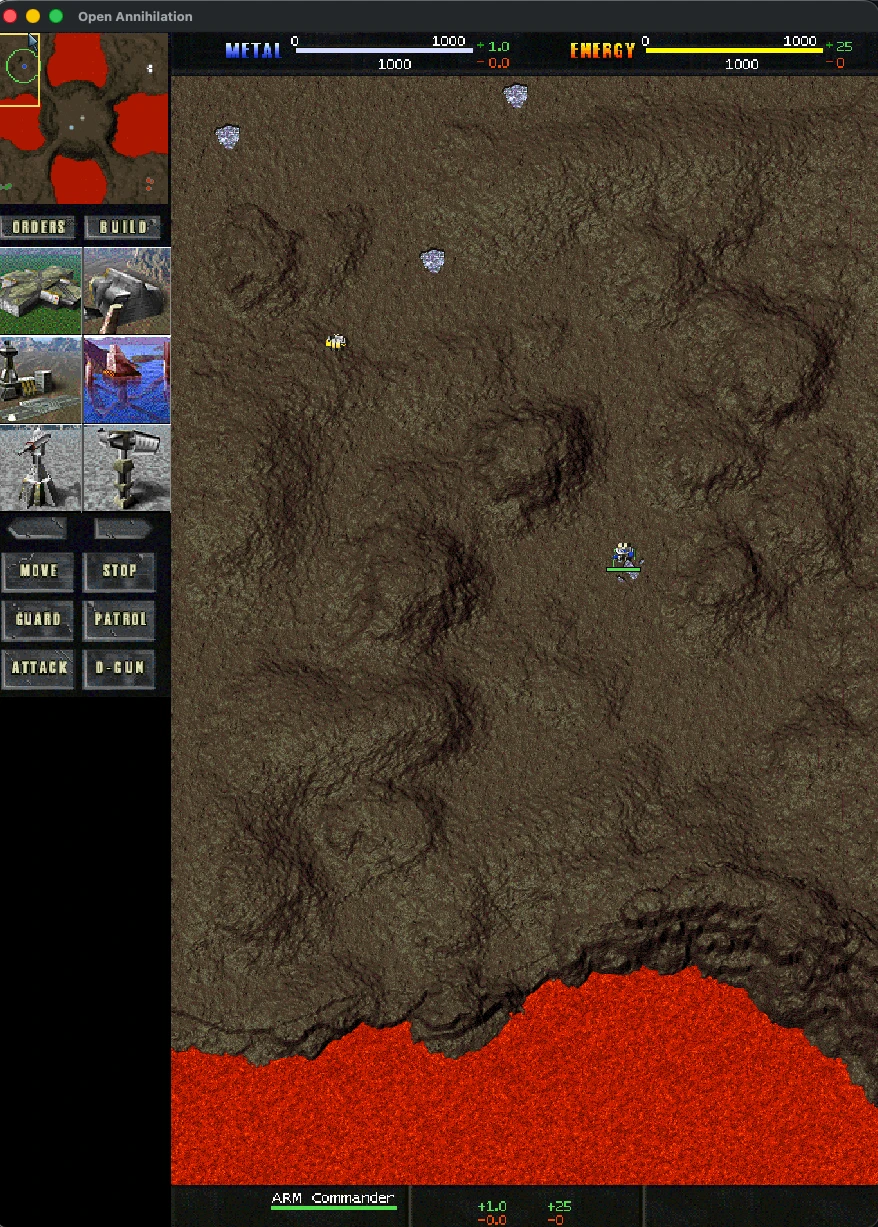
Modern displays, original look. Runs at any resolution from 640x480 to 7680x4320, keeping the original 8-bit palette rendering and interface.
Free software. Released under the GNU GPL version 3, written in C++20 on SDL3, with a test suite that checks the engine against the data of an installed copy of the game.
Current state
Open Annihilation is playable today in single player: the Arm and Core campaigns, and skirmish matches against the computer players. Network play arrives in the October release through Core Prime, the rebuilt Boneyards service, which is already in private beta with community members.
Roadmap
Ships and transports, completing the original unit roster.
Core Prime, online multiplayer through a rebuilt Boneyards service, in the October 2026 release, network-compatible with the unmodified game.
Total Annihilation: Kingdoms, the 1999 fantasy follow-up built on the same technology.
Modding tools
Alongside the engine, Steve Gray has released Kbot, a full suite of modern, cross-platform modding tools for Total Annihilation and Total Annihilation: Kingdoms. Kbot is open source under the MIT licence and runs on macOS, Windows and Linux.
One command-line tool that reads and writes the game's file formats: HPI archives, GAF and TAF animations, PCX images, palettes, bitmap fonts, TNT maps and map sections, 3DO models, COB unit scripts and TA: Kingdoms scenarios.
Kbot Studio, a browser-based workbench for browsing, previewing and inspecting every asset in an installed copy of the game.
A written reference for each of the game's file formats, and a Model Context Protocol server so AI assistants can work with game assets directly.
Steve Gray has been part of the Total Annihilation community for more than 25 years. He ran Planet Annihilation, one of the game's main fan sites during its heyday, and has followed the game through its patches, expansions and community mods ever since.
The idea of rebuilding the engine so the game could outlive Windows 95 first came up on a community forum more than twelve years ago. Like many such projects it stalled: reverse engineering a 1997 engine, its dozen file formats and its unit scripting language is a multi-year job for a single developer working evenings.
What changed is AI. Working with AI coding assistants, the author was able to turn years of accumulated community knowledge about the game's formats and behaviour, together with his own independent research into the game's network protocols and file formats, a personal project since 2014, into a working engine in a fraction of the time, while a growing test suite checks every part of it against the data and save files of an installed copy of the game.
How it was built
The engine was reverse engineered from the 1997 releases of the game and from the Boneyards-era updates of 1999 and 2000, released in the final days of Cavedog Entertainment. The file format handling that makes up much of the code was informed by community documentation dating back to 1997 and 1998, when modders first pried the game apart to build their own units and maps. That documentation was refreshed and updated as part of the Kbot project. The original executables were analysed with Ghidra, the open source software reverse engineering suite, and the engine itself was written with Anthropic's Claude models, Fable and Opus, doing the bulk of the implementation under the author's direction, alongside other tools. The result is nearly 400,000 lines of code, and the engine's test suite checks it against the data and save files of an installed copy of the game.
Quotes
"I first remember opening PC Gamer magazine in 1997 and seeing a giant pull-out ad for Total Annihilation, an A3 sized single screenshot. 3D units, meaningful terrain and physics, and battles on a scale that other games didn't do. Ever since I've played Total Annihilation, tinkering with the game and its sequel, and being part of the game's community.
"The lack of source code for the game has challenged players and creators for decades, as limits with the technology kept getting in the way of ideas. After trying to get the multiplayer services working again over a decade ago, it was too time consuming so I parked the project. Fast forward to today, and with AI I was able to realise the project - and hopefully let Total Annihilation be enjoyed by a new generation of players."
Steve Gray, author of Open Annihilation
About Total Annihilation
Total Annihilation was released in North America on 27 September 1997 by Cavedog Entertainment, a division of Humongous Entertainment, and published by GT Interactive. Designed by Chris Taylor, it was followed by two expansions, The Core Contingency (1998) and Battle Tactics (1998), and by a stream of free downloadable units and maps from Cavedog, an unusual practice at the time. Its final official patch is version 3.1c, which Open Annihilation targets.
The game remains on sale with both expansions included. At the time of writing GOG lists the Commander Pack at $1.49. The original free demo is preserved on the Internet Archive and also runs in Open Annihilation, so anyone can try the engine without buying the game.
All images on this page may be used freely in coverage of the project. Screenshots show the original game's art, which belongs to its rights holders.
Screenshots
Every capture below is the engine running natively on macOS, window title bar included. Click any image for the full-size PNG.
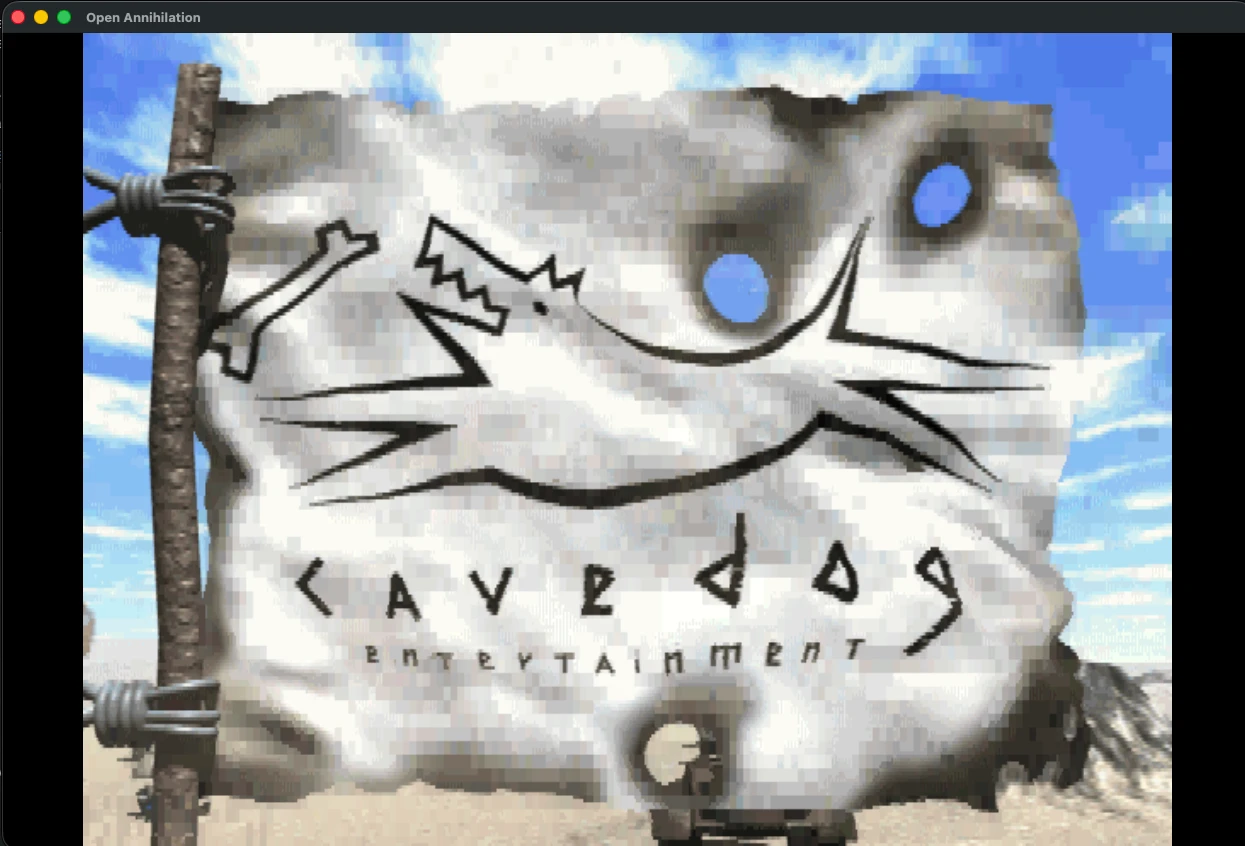
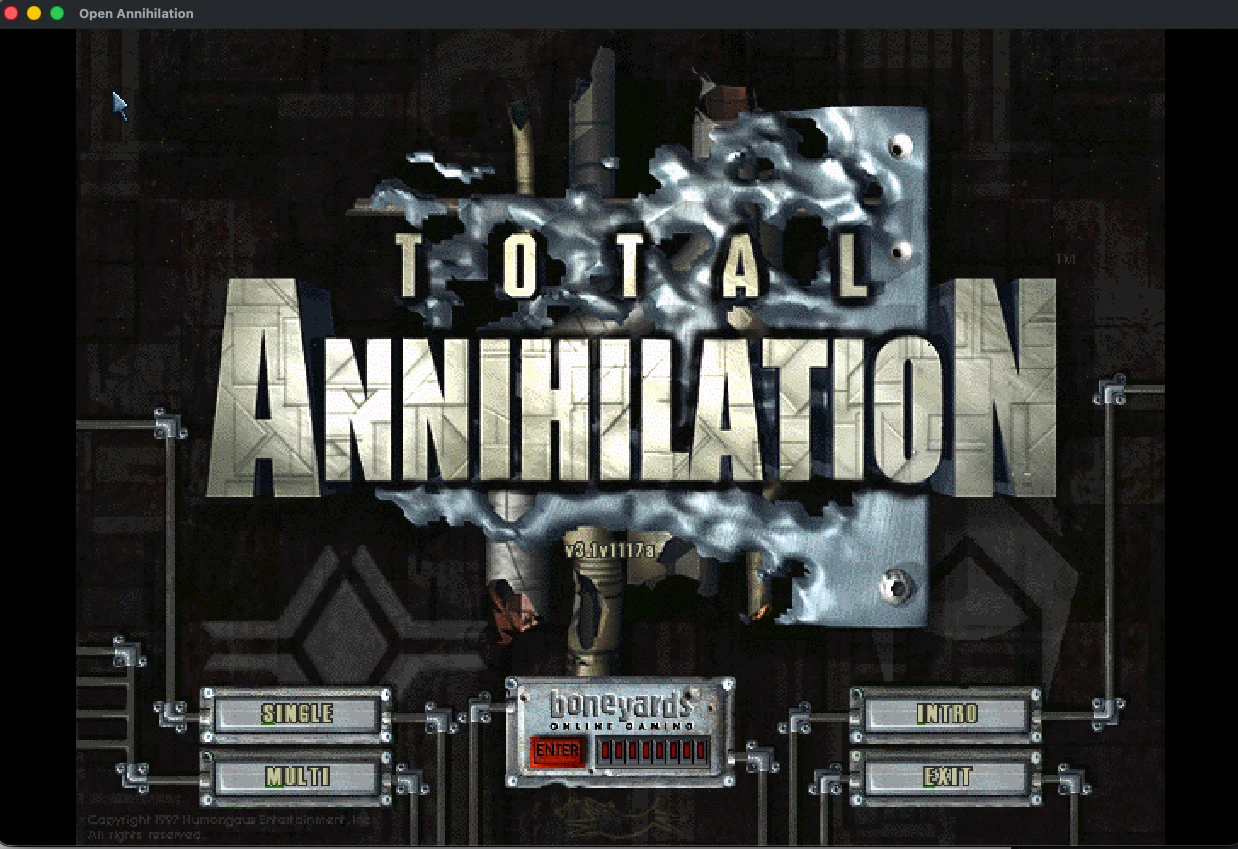
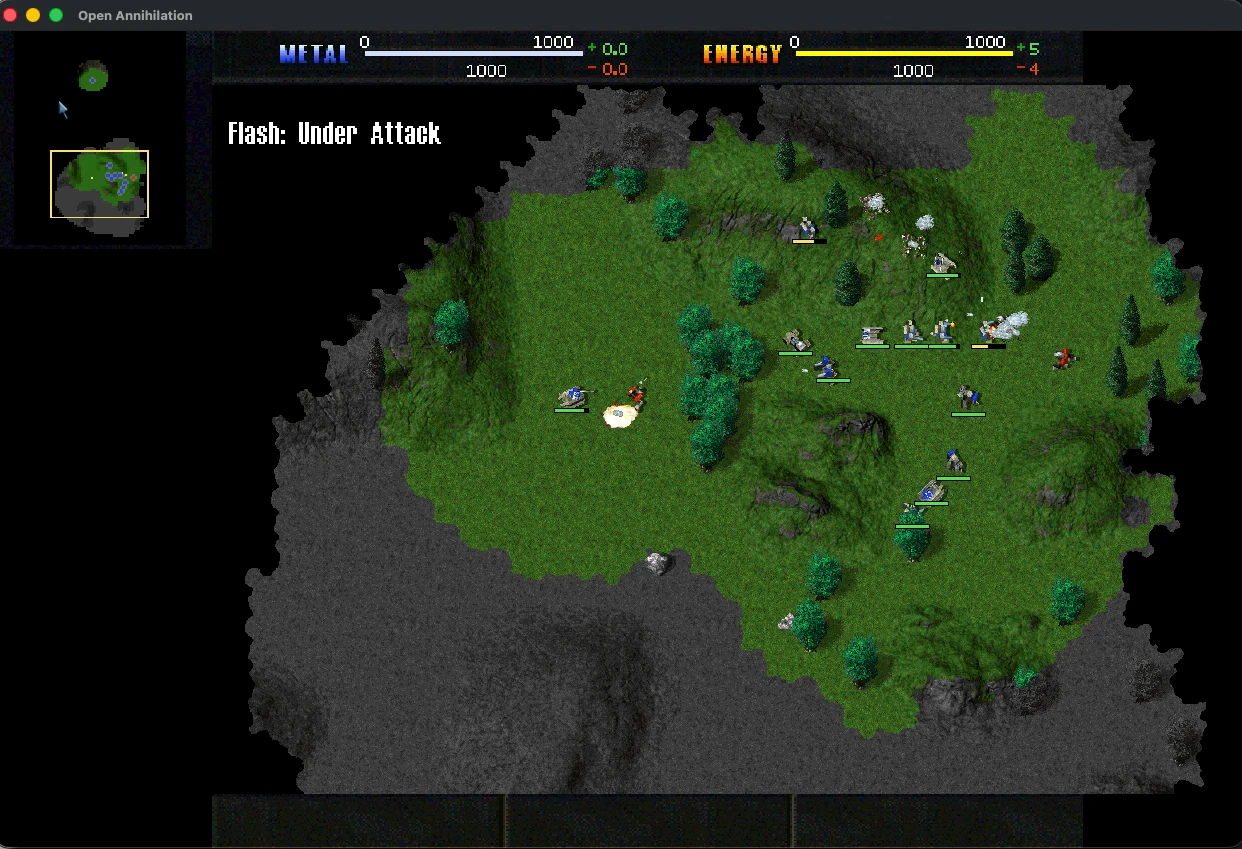
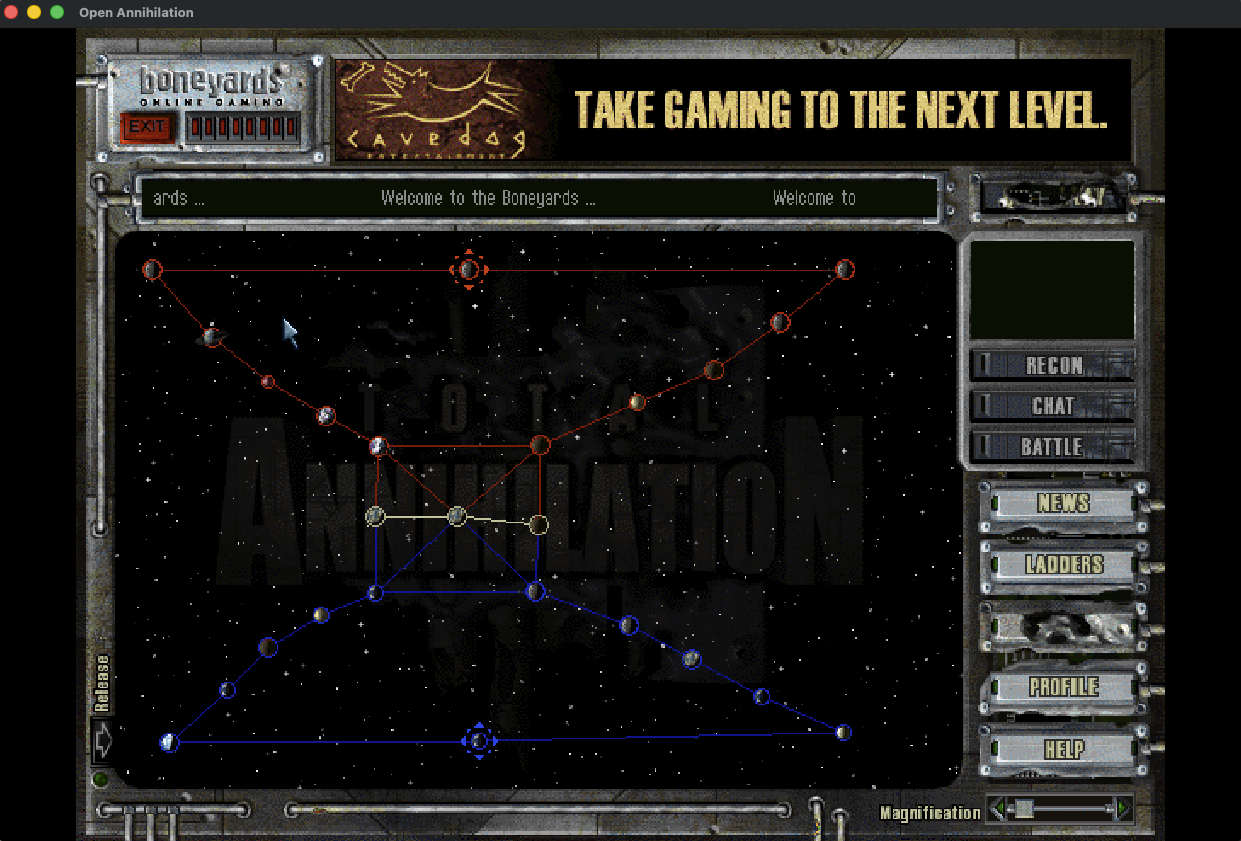
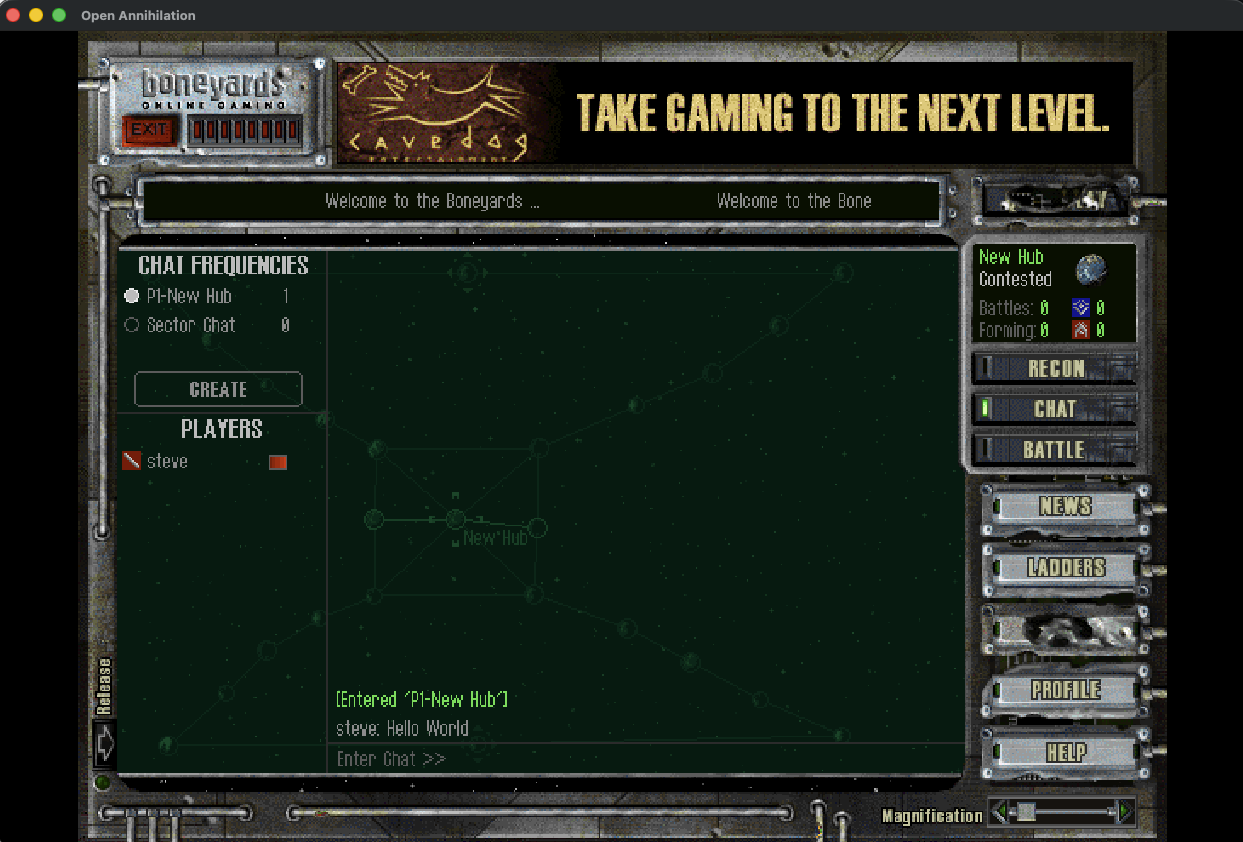
Intro playback: the original Cavedog Entertainment intro, played by the engineMain menu, the original frontend running in Open AnnihilationCampaign playBoneyards login screen, connecting to the Core Prime serviceBoneyards Galactic War mapBoneyards chatVariable resolution support: the game in a portrait window
Video
The gameplay video is embedded at the top of this page and is on YouTube at youtu.be/kxtqmTNaTC8. A downloadable copy for embedding is available to press on request.
Open Annihilation is a new engine that contains none of the original game's code, art, sound or data. It requires a legitimately purchased copy of Total Annihilation and reads the game's files from that copy at run time. It is not affiliated with, endorsed by or supported by the owners of the Total Annihilation trademark.
This is a well-established way of keeping classic games alive. OpenRA has run the original Command & Conquer and Red Alert assets in a new open source engine for well over a decade, and in February 2025 Electronic Arts went further and released the original games' own source code under the GPL. OpenMW does the same for Morrowind, OpenXcom for X-COM, OpenRCT2 for RollerCoaster Tycoon 2, CorsixTH for Theme Hospital, and ScummVM for hundreds of classic adventure games. In every case the player buys the original game, and the open engine gives it a future on hardware and operating systems its makers never saw.
Does it include the game?
No. Buy Total Annihilation on Steam or GOG, install it, and point Open Annihilation at the installation folder on first launch. To try the engine without buying the game, the original free demo from the Internet Archive works the same way.
How is this different from Spring or Beyond All Reason?
Spring and Beyond All Reason are new games inspired by Total Annihilation, with their own units, balance and rules. Open Annihilation runs the actual game: the original units, maps, campaigns, scripts and balance, from the original data files, with the aim of matching version 3.1c's behaviour closely enough that its save games load.
Why not just play the original?
On a current Windows machine the original can be made to work with community patches. On macOS and Linux it means Wine or a virtual machine, and on any platform high resolutions, modern displays and future operating system changes are a constant fight. A native, open engine removes that fight permanently, and gives the community a codebase it can fix and extend.
Does it work with mods and community units?
The vast majority of community-made maps and units work, since they use the same data formats as the retail game. Some of the largest mods depend on patches to the original executable rather than on data files, and those changes do not carry over to a rebuilt engine. Contributions that extend coverage of that content are welcome. For building and inspecting content, the author's Kbot toolchain covers the same formats the engine reads.
Can I play online?
Not in this release. Network play arrives in the October release through Core Prime, the rebuilt Boneyards service, which is already in private beta with community members. The aim is network compatibility with the unmodified game.
Can I contribute?
Yes. The source is on GitHub, the build takes a few minutes on any of the three platforms, and the README describes the layout and conventions. Bug reports from players who know the original game well are especially valuable.
Is all of it open source?
The engine, which is everything described on this page, is released under the GNU GPL version 3 and will remain free. One part is held back for now: the networking code for online play, including its protocols. Publishing it today would make cheating easier in an online scene that is still active nearly 30 years after the game's release. Once those risks have been mitigated, which is expected to take some time, that code will be folded into the GPL release as well.
Boilerplate
For copy and paste into coverage:
Open Annihilation is a free, open source engine that plays the original 1997 strategy classic Total Annihilation natively on macOS, Windows and Linux. It contains no game content and instead loads the maps, units, campaigns and save games from a copy of the game bought on Steam or GOG, including both expansion packs, aiming to match the final official release exactly. Its first release, on 27 September 2026, comes 29 years to the day after the original game's North American launch. It is developed by Steve Gray, a member of the Total Annihilation community for more than 25 years and the former owner of the fan site Planet Annihilation. Network play through Core Prime, a rebuilt Boneyards service, follows in October 2026. The engine is free software under the GNU GPL version 3. Website: play.coreprime.net. Source code and downloads: github.com/open-annihilation/open-annihilation